


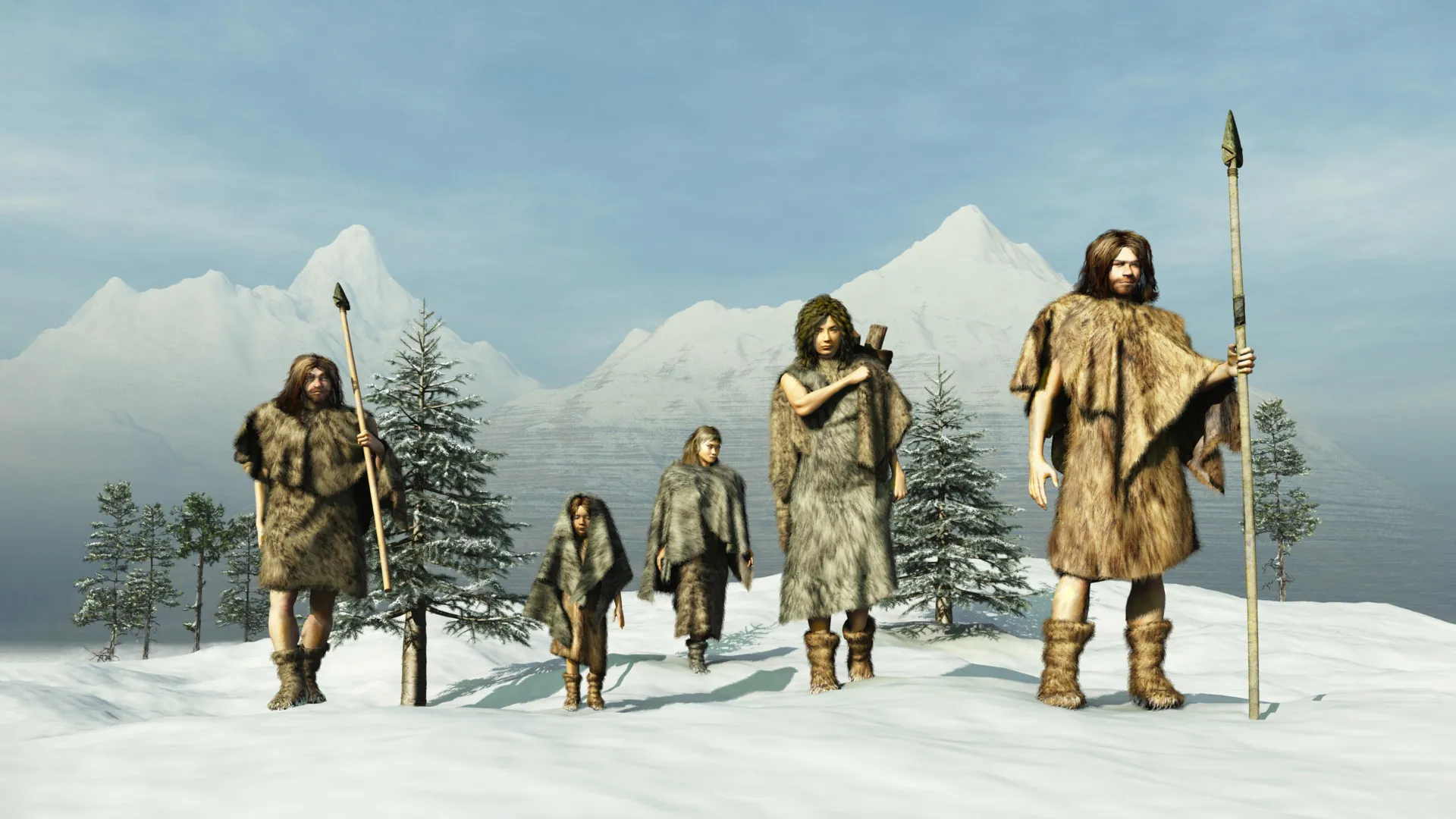
People moved back into the British Isles around 15,200 years ago after the last major ice sheet began retreating, according to new research. That timeline is nearly 500 years earlier than earlier estimates suggested.
The return of humans appears to have happened alongside a sharp increase in summer temperatures in southern Britain. At the time, Britain was still connected to mainland Europe, allowing people and animals to move across the landscape more easily.
Early humans likely followed migrating herds of reindeer and horses northward into newly opened grasslands that could support grazing animals. These hunting opportunities, combined with warmer conditions, may have made the region livable again after long periods of extreme cold.
Following the last ice age, north-west Europe experienced at least two major shifts from colder to warmer climates. Scientists believe these temperature changes happened rapidly, possibly over only a few decades.
The latest study focused on the first warming period during the Late Upper Paleolithic era (14,000 to 11,000 years ago). During this time, people repeatedly abandoned and later returned to areas across north-west Europe as climate conditions changed dramatically.
Fossil evidence has long shown that humans tended to move into regions where the environment could support survival.
Reexamining Britain’s Post-Ice Age Repopulation
The return of humans to Britain after the last ice age provides scientists with an important opportunity to study how climate and environmental change influenced migration and survival.
Earlier studies faced challenges because dating techniques were less precise and environmental records from that time were incomplete. Researchers traditionally believed north-west Europe warmed significantly around 14,700 years ago and that humans returned to Britain after that warming occurred.
But improvements in dating methods during the early 2000s changed that picture. Updated analyses of human remains and related artifacts indicated that people may have appeared in Britain before the warming event previously thought necessary for survival there.
That result created a puzzle for scientists because the climate during that period was still believed to be intensely cold and difficult for humans to endure.
Ancient Welsh Lake Reveals Climate Clues
To investigate further, researchers recalibrated radiocarbon dates connected to the human remains. The updated analysis confirmed that humans were present in the British Isles between 15,200 and 15,000 years ago.
This raised an important question. Were humans actually surviving in colder glacial conditions, or had scientists misunderstood what the climate in Britain was really like at the time?
Answers came from Llangorse Lake (Lake Syffadan) in south Wales. Sediments preserved at the lake contain a detailed environmental record spanning the past 19,000 years. The site is also close to a cave in the Wye Valley where some of the earliest evidence of post-ice-age humans in Britain was discovered.
Researchers analyzed fossil pollen, chironomids (non-biting midges), and chemical signatures preserved in the lake sediments. The results revealed that earlier reconstructions of the region’s climate were likely incorrect.
The chironomids helped scientists estimate ancient summer temperatures. Their findings showed Britain warmed differently than other parts of north-west Europe and Greenland. Summer temperatures appear to have jumped from around 5-7°C to 10-14°C about 15,200 years ago in Britain, which is roughly 500 years earlier than previously believed.
Reindeer, Horses, and Human Migration
Evidence shows that reindeer and horses were already becoming more common in southern Britain around 15,500 years ago, shortly before the warming period. These animals were taking advantage of expanding grazing land as the environment improved.
Humans likely followed these herds northward into Britain while adapting to the somewhat warmer summer conditions.
By combining archaeological evidence with climate and environmental records, researchers were able to build a more accurate timeline for when humans could reenter areas that had once been too harsh to inhabit. Reassessing older radiocarbon dates and improving climate reconstructions allowed scientists to better pinpoint when shifts from cold to warm conditions occurred.
The study offers a clearer understanding of how people responded to environmental change during the Late Upper Paleolithic period. Human survival drove these migrations, and access to prey animals was critical. Researchers also found that relatively modest increases in summer temperatures may have been enough to trigger major population movements.
The findings may also have relevance today. Scientists say studying how humans reacted to climate shifts thousands of years ago could help improve understanding of how modern populations may respond to environmental change in the future.
As polar regions continue warming and glaciers melt, the same basic pressures that shaped ancient human migration could once again influence where people are able to live.