


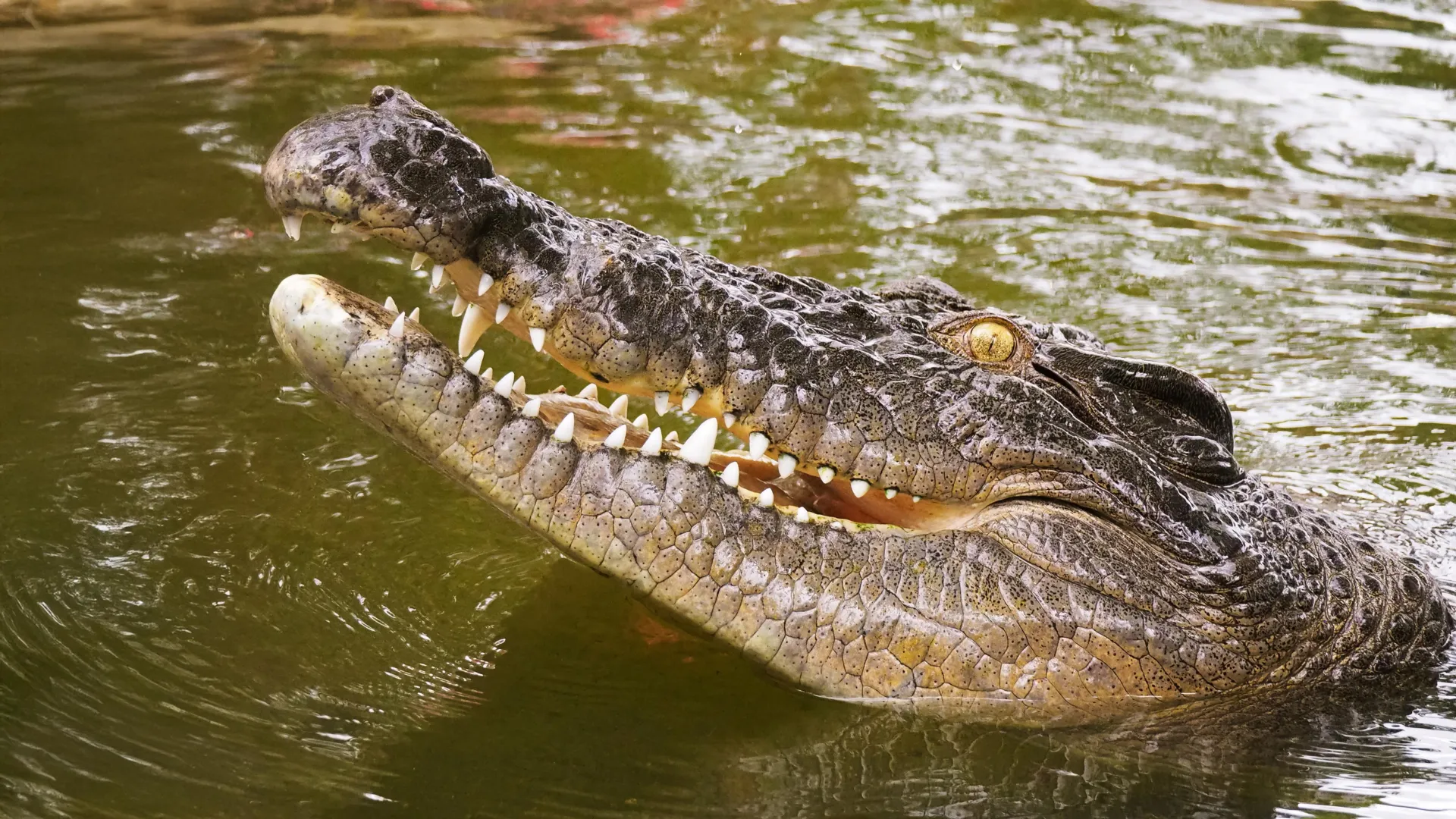
For more than 250 years, stories from early explorers described crocodiles as a common sight along the shores of the Seychelles. But after permanent settlers arrived in 1770, the island population disappeared rapidly. Within about 50 years, the crocodiles had been completely exterminated.
Now, scientists have finally uncovered the true identity of these vanished reptiles through a new genetic analysis. The study found that the Seychelles crocodiles were not a separate species, as some once suspected. Instead, they were the westernmost known population of the saltwater crocodile (Crocodylus porosus), the world’s largest living reptile and one of its most capable ocean travelers.
DNA Reveals the Origins of Seychelles Crocodiles
Researchers from Germany and the Seychelles investigated the evolutionary history of the saltwater crocodile by comparing DNA from modern animals with genetic material taken from historical museum specimens. The team analyzed mitochondrial genomes from preserved crocodiles belonging to the genus Crocodylus, including rare samples from the Seychelles population that vanished roughly 200 years ago.
The findings confirmed an earlier theory that had been based only on the crocodiles’ physical appearance. Genetic evidence now shows the Seychelles animals were closely connected to saltwater crocodiles living thousands of kilometers away.
Crocodiles Crossed Vast Distances Across the Indian Ocean
Among all living crocodile species, the saltwater crocodile is especially well adapted for life at sea. Specialized salt glands allow these reptiles to remove excess salt from their bodies, enabling them to survive for long periods in seawater. Over time, this ability helped the species spread across enormous stretches of coastline and remote islands.
“The founders of the Seychelles population must have drifted at least 3,000 kilometers across the Indian Ocean to reach the remote archipelago, perhaps even much further,” says reptile expert Frank Glaw of the Bavarian State Collections of Natural History (SNSB) and senior author of the study.
Scientists believe these crocodiles likely traveled with ocean currents over generations, eventually establishing a population in the isolated islands of the Seychelles.
One of the World’s Most Wide Ranging Reptiles
“The genetic patterns suggest that saltwater crocodile populations remained connected over long periods and across great distances, pointing to the high mobility of this species,” explains first author Stefanie Agne of the University of Potsdam.
Today, the saltwater crocodile remains one of the most widely distributed reptiles on Earth. Before the Seychelles population was wiped out, the species occupied an even larger range that stretched more than 12,000 kilometers from Vanuatu in the Pacific Ocean to the Seychelles in the Indian Ocean.