


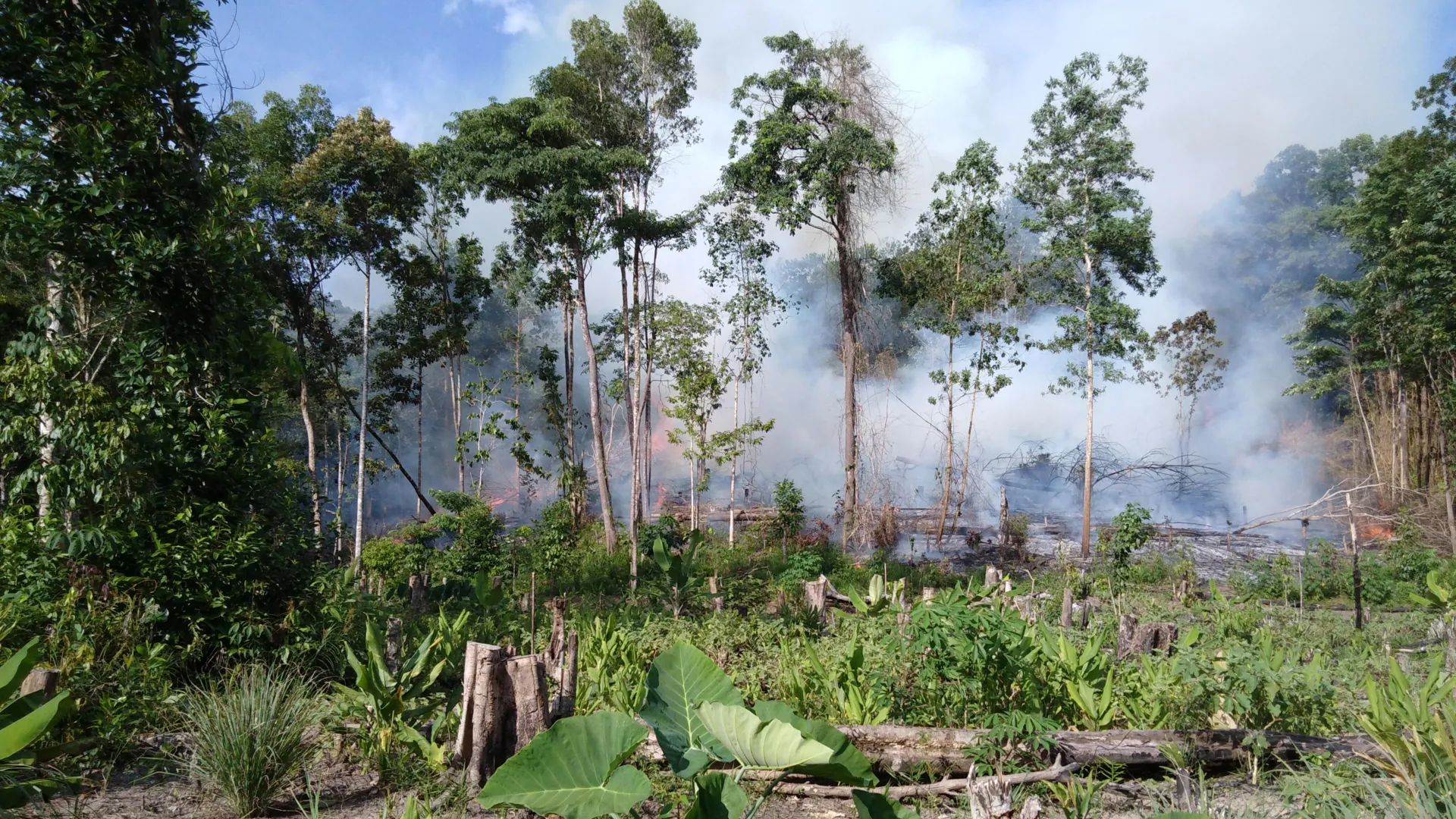
A new study has found a sharp and unusual rise in wildfires in tropical peatlands during the 20th century, marking a clear departure from long-term historical patterns.
Peatlands are massive underground carbon reservoirs, storing more carbon than all of the world’s forests combined. When these areas burn, they release large amounts of that stored carbon into the atmosphere.
While wildfires have increased across tropical regions in recent decades, scientists have had limited insight into how fires in tropical peatlands behaved over longer periods.
Ancient Charcoal Records Reveal Fire History
To better understand past fire activity, researchers examined charcoal preserved in peat deposits from Central and South America, Africa, Southeast Asia, and Australasia. These records allowed them to reconstruct wildfire patterns going back more than 2,000 years.
The findings show that peatland fires have historically been closely tied to climate conditions, especially how long and severe droughts were.
Long-Term Decline Followed by Modern Spike
The study revealed that wildfire activity in tropical peatlands actually decreased for over 1,000 years. This decline tracked with shifts in global temperatures and other natural climate factors.
However, this long-term trend reversed in the 20th century, when wildfire activity rose sharply. Differences between regions suggest that human influence is the main reason for this sudden increase.
Human Activity Driving Peatland Fires
The rise in fires was most pronounced in Southeast Asia and parts of Australasia. In these regions, practices such as draining peatlands for agriculture, clearing forests, and converting land for development have made peat soils far more likely to ignite.
In contrast, more remote peatland areas in South America and Africa did not show the same increase. Still, lead author Dr. Yuwan Wang cautions that these regions could face growing wildfire risks as populations expand and agriculture and infrastructure spread.
Urgent Need to Protect Carbon-Rich Ecosystems
“To avoid large carbon emissions that further contribute to global warming, we urgently need to protect these carbon-dense ecosystems,” said Dr. Wang from the University of Exeter.
“A reduction in tropical peatland burning could be achieved through peatland conservation and promoting sustainable resource management and ecosystem restoration, but this requires the collaboration of multiple groups and has to be carried out at a sufficiently large scale.”
The study, titled “Unprecedented burning in tropical peatlands during the 20th century compared to the previous two millennia,” is published in Global Change Biology.