


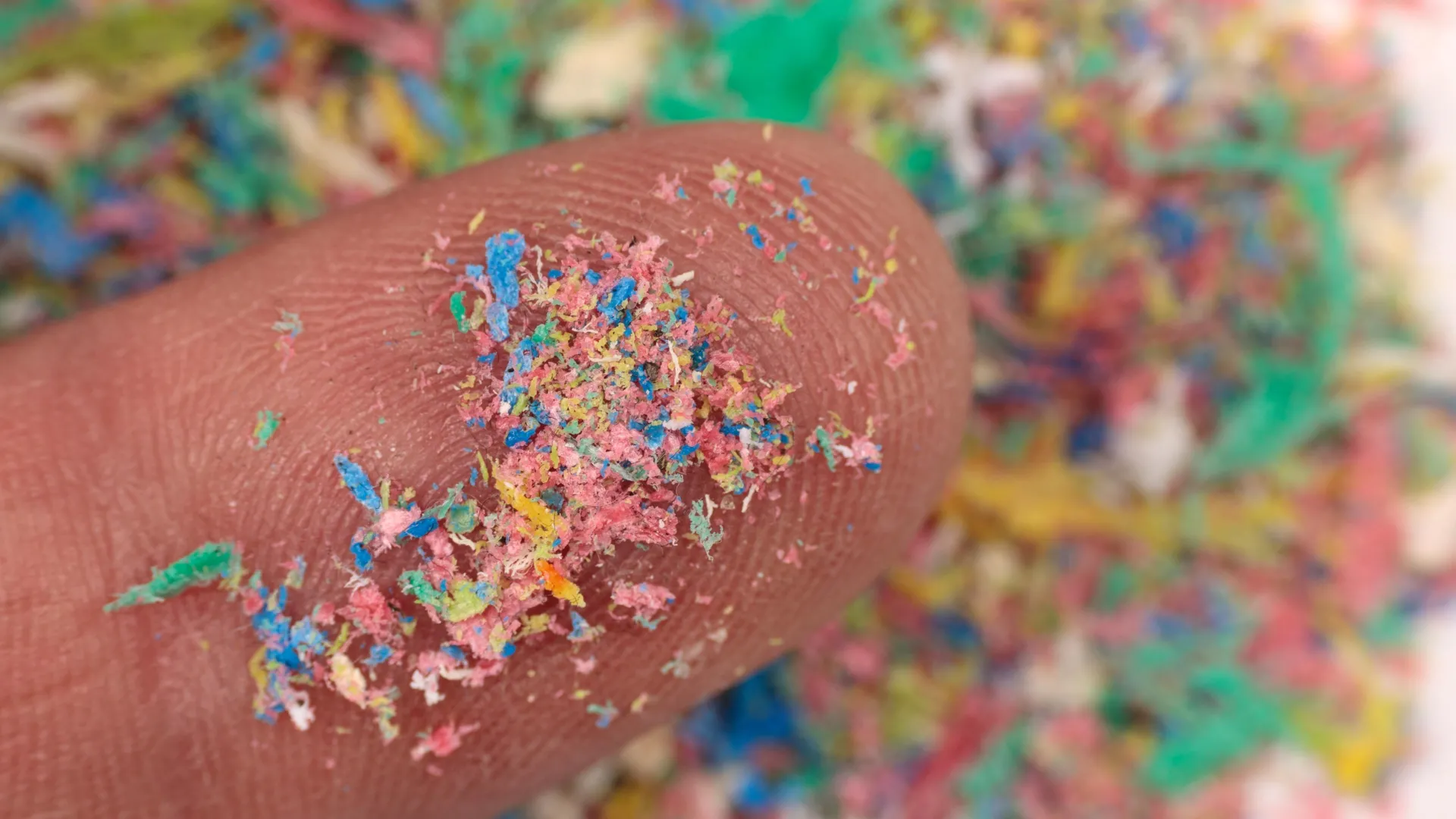
An international team led by researchers at the University of Kentucky Martin-Gatton College of Agriculture, Food and Environment has found that Antarctica’s only native insect is already consuming microplastics, despite living in one of the most isolated places on Earth.
The findings, published in Science of the Total Environment, mark the first study to investigate how microplastics affect an Antarctic insect and the first to confirm plastic particles inside wild-caught midges.
The project began in 2020 when Jack Devlin, then a Ph.D. student, was struck by a documentary about plastic pollution before later moving to Scotland to work as a marine ornithologist.
“Watching that film just blew my mind,” Devlin said. “I started reading about plastic’s effects on insects and thought, ‘If plastic is turning up everywhere else, what about rare places like Antarctica?'”
Meet Belgica antarctica, Antarctica’s Extreme Survivor
The species at the center of the study, Belgica antarctica, is a nonbiting midge, which is a small fly about the size of a grain of rice. It is the southernmost insect on the planet and the only insect species native exclusively to Antarctica.
Its larvae inhabit damp mats of moss and algae along the Antarctic Peninsula. In some spots, their numbers can reach nearly 40,000 per square meter. By feeding on decaying plant matter, they help recycle nutrients and keep the fragile soil ecosystem functioning.
“They’re what we call poly-extremophiles,” Devlin said. “They cope with intense cold, drying out, high salt, big swings in temperature and UV radiation. So, the big question was: Does that toughness protect them from a new stress like microplastics, or does it make them vulnerable to something they’ve never seen before?”
Although Antarctica is often viewed as untouched wilderness, previous research has detected plastic fragments in fresh snow and nearby seawater. While levels are lower than in most parts of the world, plastics still arrive through ocean currents, wind transport, and human activity linked to research stations and ships.
Lab Tests Reveal Subtle Effects of Microplastics
To understand how plastic exposure might affect the insects, researchers ran a series of controlled experiments. The initial results were surprising.
“Even at the highest plastic concentrations, survival didn’t drop,” Devlin said. “Their basic metabolism didn’t change either. On the surface, they seemed to be doing fine.”
However, deeper analysis uncovered a hidden impact. Larvae exposed to higher levels of microplastics showed reduced fat reserves, even though their carbohydrate and protein levels stayed consistent. Fat is essential for energy storage, especially in Antarctica’s harsh climate.
Devlin suspects that slow feeding in cold conditions and the complexity of natural soils may limit how much plastic the larvae actually ingest. Because of the challenges of conducting research in Antarctica, the exposure experiment lasted only 10 days. He noted that longer-term studies will be necessary to determine how ongoing exposure might affect the insects over time.
Microplastics Found in Wild Antarctic Midges
The second phase of the project addressed a straightforward but critical question: Are wild Belgica antarctica larvae already ingesting microplastics in their natural environment?
During a 2023 research cruise along the western Antarctic Peninsula, the team gathered larvae from 20 sites across 13 islands. The specimens were preserved immediately to prevent additional feeding.
To detect plastic particles inside the insects, Devlin worked with Elisa Bergami, a microplastics specialist at the University of Modena and Reggio Emilia, and imaging expert Giovanni Birarda at Elettra Sincrotrone Trieste. The team dissected the five millimeter larvae and examined their gut contents using advanced imaging tools capable of identifying chemical “fingerprints” of particles as small as four micrometers, far below what the human eye can see.
Out of 40 larvae analyzed, researchers identified two microplastic fragments.
Finding only two pieces may appear insignificant, but Devlin sees it as an early signal.
“Antarctica still has much lower plastic levels than most of the planet, and that’s good news,” Devlin said. “Our study suggests that, right now, microplastics are not flooding these soil communities. But we can now say they are getting into the system, and at high enough levels they start to change the insect’s energy balance.”
Because the midge has no known land based predators, plastic it consumes is unlikely to move far up the food chain. Still, Devlin is concerned about what prolonged exposure could mean for larvae that develop over two years, particularly as climate change brings warmer and drier conditions that add new pressures.
Plastic Pollution Reaches the Ends of the Earth
For Devlin, the discovery underscores how widespread plastic pollution has become.
“This started because I watched a documentary and thought, ‘Surely Antarctica is one of the last places not dealing with this,'” Devlin said. “Then you go there, you work with this incredible little insect that lives where there are no trees, barely any plants, and you still find plastic in its gut. That really brings home how widespread the problem is.”
Future research will monitor microplastic levels in Antarctic soils and conduct longer, multi stress experiments on Belgica antarctica and other soil organisms.
“Antarctica gives us a simpler ecosystem to ask very focused questions,” Devlin said. “If we pay attention now, we might learn lessons that apply far beyond the polar regions.”
This work was supported by the Antarctic Science International Bursary, the U.S. National Science Foundation and the National Institute of Food and Agriculture.
Research reported in this publication was supported by the U.S. National Science Foundation under Award No. 1850988. The opinions, findings, and conclusions or recommendations expressed are those of the author(s) and do not necessarily reflect the views of the U.S. National Science Foundation.
This material is based upon work that is supported by the National Institute of Food and Agriculture, U.S. Department of Agriculture, Hatch Project under award number 7000545. Any opinions, findings, conclusions or recommendations expressed in this publication are those of the author(s) and do not necessarily reflect the view of the Department of Agriculture.