


As the global population grows, the pressure to produce nutritious food more efficiently continues to increase. At the same time, food manufacturing generates large amounts of leftover material that often goes unused. Scientists reporting in the American Chemical Society’s Journal of Agricultural and Food Chemistry investigated whether waste from carrot processing could serve a new purpose. By feeding carrot side streams to edible fungi, the researchers created a sustainable protein source.
They then used this fungal protein in experimental vegan patties and sausages. When these foods were tested, volunteers rated them as more enjoyable than comparable products made with traditional plant-based proteins.
“This study is a significant step towards a circular economy by transforming valuable food side streams into a high-quality protein source, highlighting the potential of fungal mycelium in addressing global food security and sustainability challenges,” says Martin Gand, the corresponding author of the study.
The Global Need for New Food Solutions
The urgency for alternative protein sources is clear. According to the United Nations, about one in 11 people worldwide experienced hunger in 2023, and more than three billion people could not afford a healthy diet. These challenges point to the need for food systems that deliver more nutrition while using fewer resources.
Edible fungi offer one possible solution. Previous research has shown that fungi can grow on food industry leftovers such as apple pomace and whey from apple juice and cheese manufacturing, respectively. Building on this work, Gand and his colleagues set out to recover nutrients from carrot side streams and reuse them as a growing medium for fungi.
Instead of harvesting mushroom caps, the team focused on fungal mycelia. These root-like structures grow faster and take up less space, while still producing nutrients that are beneficial for human diets.
Selecting the Best Fungus for Protein Production
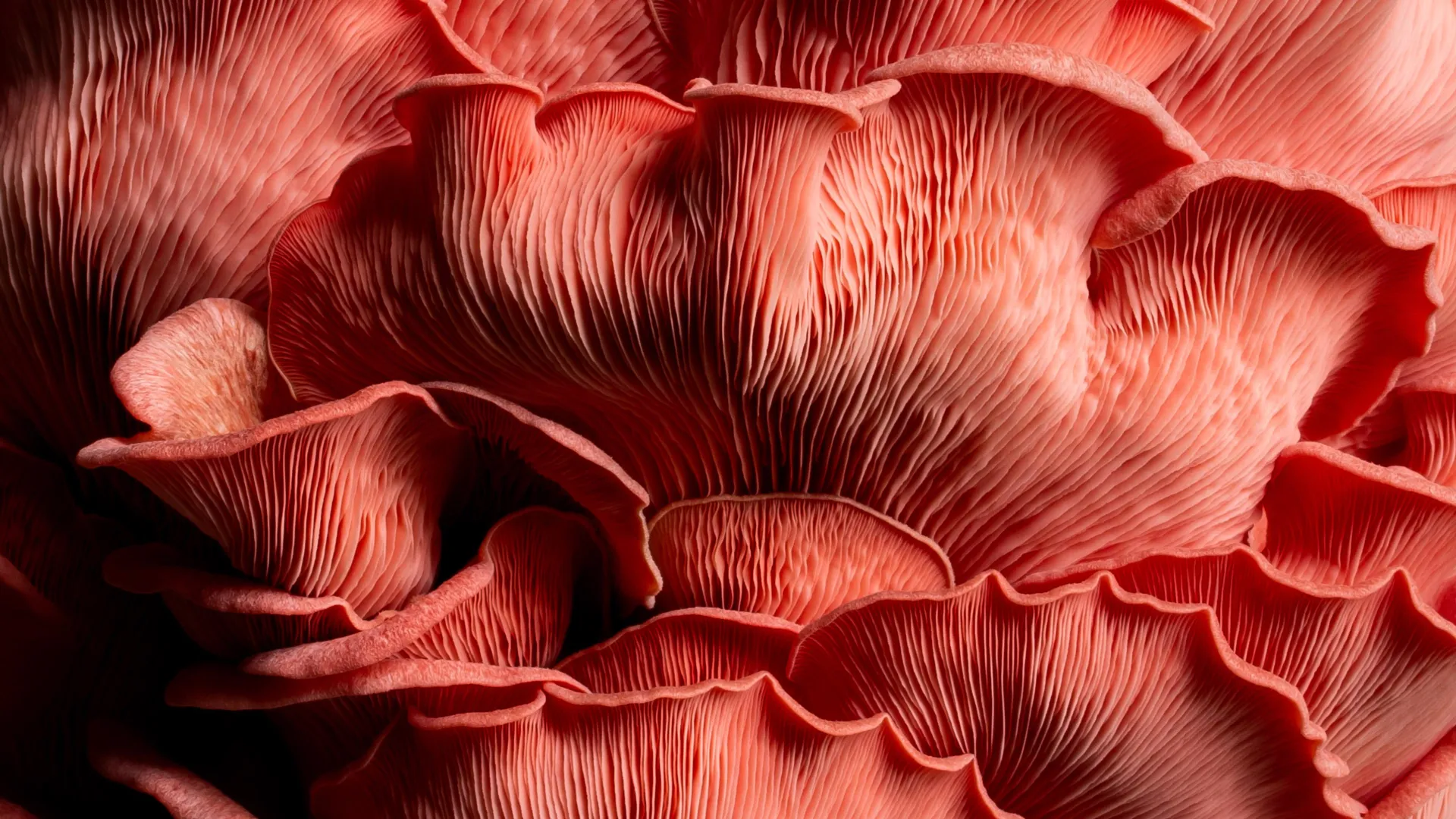
To identify the most promising option, the researchers tested 106 different fungal strains grown on side streams from orange and black carrots used in natural color production. Each strain was evaluated for growth performance and protein output. One fungus emerged as the top candidate: Pleurotus djamor (pink oyster mushroom).
After selecting this species, the researchers adjusted growth conditions to increase protein yield. The resulting protein showed biological values similar to those of animal and plant proteins, meaning it could be efficiently used by the human body. The P. djamor mycelia were also low in fat and contained fiber levels comparable to other edible fungi.
Taste Tests With Vegan Foods
To see how the fungal protein worked in real foods, the team prepared vegan patties that replaced soy protein with different amounts of mycelia. The patties contained 0%, 25%, 50%, 75% and 100% fungal protein. Volunteers evaluated the patties based on texture, flavor, and aroma. A key finding was that participants preferred the patties made entirely with mycelium over those made entirely with soy.
The researchers also produced vegan sausages using either soaked chickpeas or fresh mycelia. In these tests, volunteers generally favored both the smell and taste of the sausages that included fungal mycelium.
A Low-Waste Path to Future Protein
Overall, the findings suggest that fungal mycelia could serve as a sustainable and appealing protein source. The process makes use of food production materials that would otherwise be discarded, without requiring additional farmland, and offers nutritional benefits similar to existing plant-based proteins. Gand adds, “utilizing side streams as substrate for mycelium production reduces environmental impact while adding value and supports food security by enabling an efficient and sustainable protein production.”
The authors also note that the research was supported by institutional resources and GNT Europa GmbH, a company that produces natural food colors.