


Deep within Greenland’s vast ice sheet, scientists have uncovered an unusual chemical signal that has sparked years of debate. At the center of the mystery is a sharp rise in platinum levels found in an ice core (a cylinder of ice drilled out of ice sheets and glaciers) dating back about 12,800 years. This discovery was once seen as evidence that Earth may have been struck by a rare meteorite or comet.
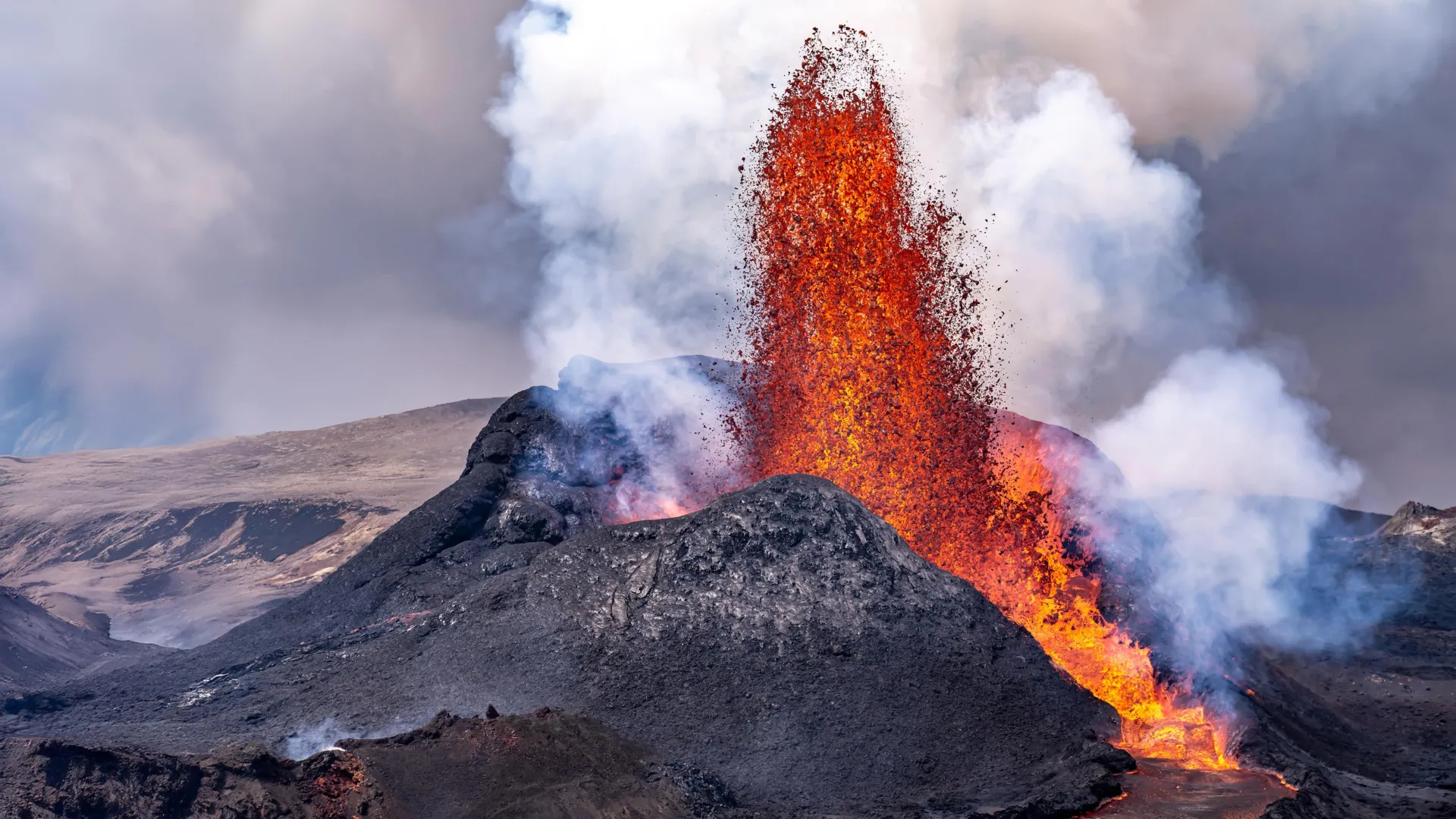
New findings suggest a far more down to earth explanation. The platinum spike may have come from a volcanic fissure eruption in Iceland rather than an object from space.
The Younger Dryas and a Sudden Climate Shift
The timing of this signal is critical. It appears close to the start of the Younger Dryas Event, a dramatic cold period that lasted from roughly 12,870 to 11,700 years ago. During this time, temperatures across the northern hemisphere dropped sharply.
This cooling came just as the planet was emerging from the last ice age and beginning to warm. Identifying what caused this sudden reversal could offer valuable insight into how Earth’s climate system behaves under stress.
Researchers now suggest that this cold phase may have been triggered by a major volcanic eruption in Germany or possibly an eruption from an as yet unidentified volcano.
Competing Theories Behind the Climate Mystery
Ice core records show just how extreme the Younger Dryas was. In Greenland, temperatures fell to more than 15°C colder than today. Across Europe, forests gave way to tundra, and rainfall patterns in lower latitudes shifted southward.
The leading explanation has long been a massive influx of freshwater from melting North American ice sheets. This surge is thought to have disrupted ocean circulation and cooled the climate. However, another theory proposed that a comet or asteroid impact over North America triggered the event.
Platinum Spike Raises New Questions
In 2013, scientists studying ice cores from the Greenland Ice Sheet Project (GISP2) found unusually high platinum concentrations. The ratio of platinum to iridium was especially puzzling. Space rocks typically contain high levels of iridium, but this signal did not. The chemical signature also did not match known meteorites or volcanic materials.
Some researchers suggested the spike could be evidence of an unusual iron rich asteroid. Others proposed it might be linked to the Laacher See volcanic eruption in Germany, which occurred around the same time and has a distinctive chemical profile.
To investigate, researchers analyzed 17 samples of volcanic pumice from Laacher See deposits. They measured platinum, iridium, and other trace elements to build a chemical fingerprint.
The results were decisive. The pumice samples contained almost no platinum, with levels at or below detection limits. This ruled out the Laacher See eruption as the source of the Greenland platinum spike.
Timing and Duration Tell a Different Story
A closer look at the timeline provided another important clue. Updated ice core dating shows the platinum spike occurred about 45 years after the Younger Dryas began, making it too late to have caused the initial cooling.
This finding aligns with earlier studies. In addition, the elevated platinum levels persisted for about 14 years, indicating a sustained process rather than a sudden event like a meteorite or comet impact.
When scientists compared the ice core chemistry with other geological samples, the closest match came from volcanic gas condensates (the products formed when gases released from a volcano cool from a gas to a liquid or solid state), especially those linked to underwater volcanic activity.
Icelandic Volcanoes as a Likely Source
Volcanoes in Iceland are capable of producing fissure eruptions that last for years or even decades, consistent with the 14 year platinum signal. During the period leading up to the Younger Dryas, increased melting of ice sheets reduced pressure on the Earth’s crust, likely boosting volcanic activity in the region.
Submarine and subglacial eruptions interact with water in ways that can produce unusual chemical signatures. Seawater can remove sulfur compounds while concentrating metals such as platinum in volcanic gases. These gases can travel through the atmosphere and settle onto distant ice sheets, including Greenland.
Evidence from more recent Icelandic eruptions supports this idea. The 8th century Katla eruption created a 12-year spike in metals like bismuth and thallium in Greenland ice cores. The 10th century Eldgjá eruption left behind a cadmium signal. Although platinum was not measured in those cases, they show that Icelandic volcanoes can transport heavy metals over long distances.
Did Volcanoes Trigger the Younger Dryas
Because the platinum spike occurred after the cooling began, it was not the trigger for the Younger Dryas. However, other ice core records reveal a large volcanic sulfate spike that lines up precisely with the onset of cooling around 12,870 years ago.
This eruption, whether from Laacher See or another volcano, released enough sulfur into the atmosphere to rival the most powerful eruptions in recorded history. Sulfur in the stratosphere can reflect sunlight and cool the planet, potentially setting off feedback effects such as expanding sea ice, shifting winds, and disrupted ocean circulation.
At a time when Earth’s climate was already in a delicate transition between glacial and interglacial (the periods between cold snaps) conditions, this volcanic activity may have pushed the system back into a cold state.
What This Means for Future Climate Risks
This research focused specifically on the platinum signal and did not evaluate other proposed impact evidence such as spherules (spherical fragments of melted rock) and black mats (mysterious dark layers in soil). Even so, the simplest explanation based on current evidence points to a large volcanic eruption in the northern hemisphere as the main driver of the Younger Dryas.
Understanding how past events triggered abrupt climate shifts is essential for anticipating future risks. While large meteorite impacts and major volcanic eruptions are rare in any given year, they are inevitable over long timescales. Learning how Earth responded in the past helps scientists better prepare for the consequences of future global disruptions.