


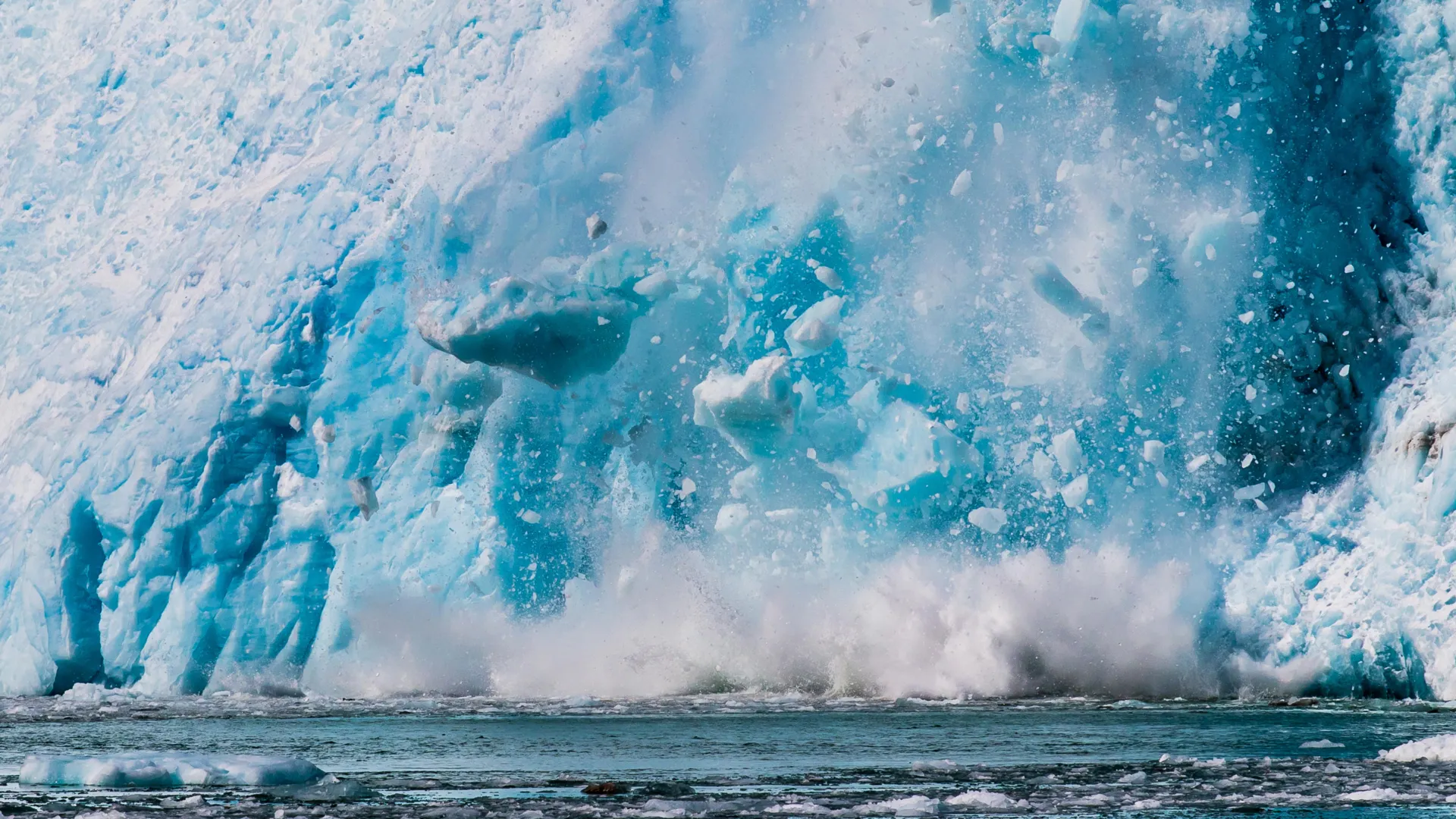
A glacier on Antarctica’s Eastern Peninsula underwent the most rapid retreat seen in modern times. In only two months, nearly half of Hektoria Glacier broke apart and disappeared.
New research led by the University of Colorado Boulder and published in Nature Geoscience explains what happened in 2023, when the glacier lost about eight kilometers of ice in just 60 days. The study found that the key factor was the flat bedrock beneath the glacier. As the ice thinned, this smooth foundation allowed large sections to lift off the ground and float, triggering an unusual and sudden calving event.
The findings could help scientists pinpoint other Antarctic glaciers that might be vulnerable to similar rapid collapse. Hektoria Glacier is relatively small by Antarctic standards, covering about 115 square miles, roughly the size of Philadelphia. However, if a much larger glacier were to retreat this quickly, the consequences for global sea level rise could be severe.
“When we flew over Hektoria in early 2024, I couldn’t believe the vastness of the area that had collapsed,” said Naomi Ochwat, lead author and CIRES postdoctoral researcher. “I had seen the fjord and notable mountain features in the satellite images, but being there in person filled me with astonishment at what had happened.”
Satellite Data Revealed a Sudden Collapse
Ochwat and her colleagues, including CIRES Senior Research Scientist Ted Scambos, were initially studying the region for a different project. They were investigating why sea ice detached from a glacier years after a nearby ice shelf broke apart in 2002.
While reviewing satellite and remote sensing data, Ochwat noticed something unexpected. The images showed that Hektoria Glacier had retreated dramatically within a short window of time. That discovery led her to focus on a pressing question: why did this glacier collapse so quickly?
Ice Plain Topography and Grounding Lines
Many Antarctic glaciers are tidewater glaciers, meaning they sit on the ocean floor and extend into the sea, where they release icebergs. The landscape beneath them can vary widely. Some rest over deep troughs or underwater mountains, while others lie across broad, flat plains.
Hektoria sat on what scientists call an ice plain, a flat stretch of bedrock below sea level. Geological evidence shows that between 15,000-19,000 years ago, glaciers positioned over similar ice plains retreated at extraordinary speeds, sometimes moving back hundreds of meters per day. That historical insight helped researchers interpret what they were seeing at Hektoria.
When a tidewater glacier thins enough, it can lift off the seabed and begin floating on the ocean surface. The location where it transitions from grounded to floating ice is known as the grounding line. By analyzing multiple satellite datasets, the team identified several grounding lines at Hektoria, a sign of ice plain conditions beneath the glacier.
Rare Calving Process Triggered Rapid Ice Loss
Because the glacier rested on a flat bed, large portions were able to lift off almost at once. Once afloat, the ice was exposed to powerful ocean forces. Cracks opened along the base of the glacier and eventually connected with fractures at the surface. This chain reaction caused extensive calving, breaking apart nearly half the glacier in a matter of weeks.
By combining frequent satellite observations, the researchers reconstructed the sequence of events in detail.
“If we only had one image every three months, we might not be able to tell you that the glacier lost two and a half kilometers in two days,” Ochwat said. “Combining these different satellites, we can fill in time gaps and confirm how quickly the glacier lost ice.”
Glacier Earthquakes Confirmed Ice Loss
The team also deployed seismic instruments that detected a series of glacier earthquakes during the period of rapid retreat. These tremors confirmed that the glacier had been firmly grounded on bedrock before lifting off. The data not only verified the presence of an ice plain but also showed that the ice loss directly contributed to rising global sea levels.
Ice plains have been identified beneath many other Antarctic glaciers. Understanding how they influence retreat rates will help scientists better forecast which glaciers might be prone to sudden collapse in the future.
“Hektoria’s retreat is a bit of a shock — this kind of lighting-fast retreat really changes what’s possible for other, larger glaciers on the continent,” Scambos said. “If the same conditions set up in some of the other areas, it could greatly speed up sea level rise from the continent.”